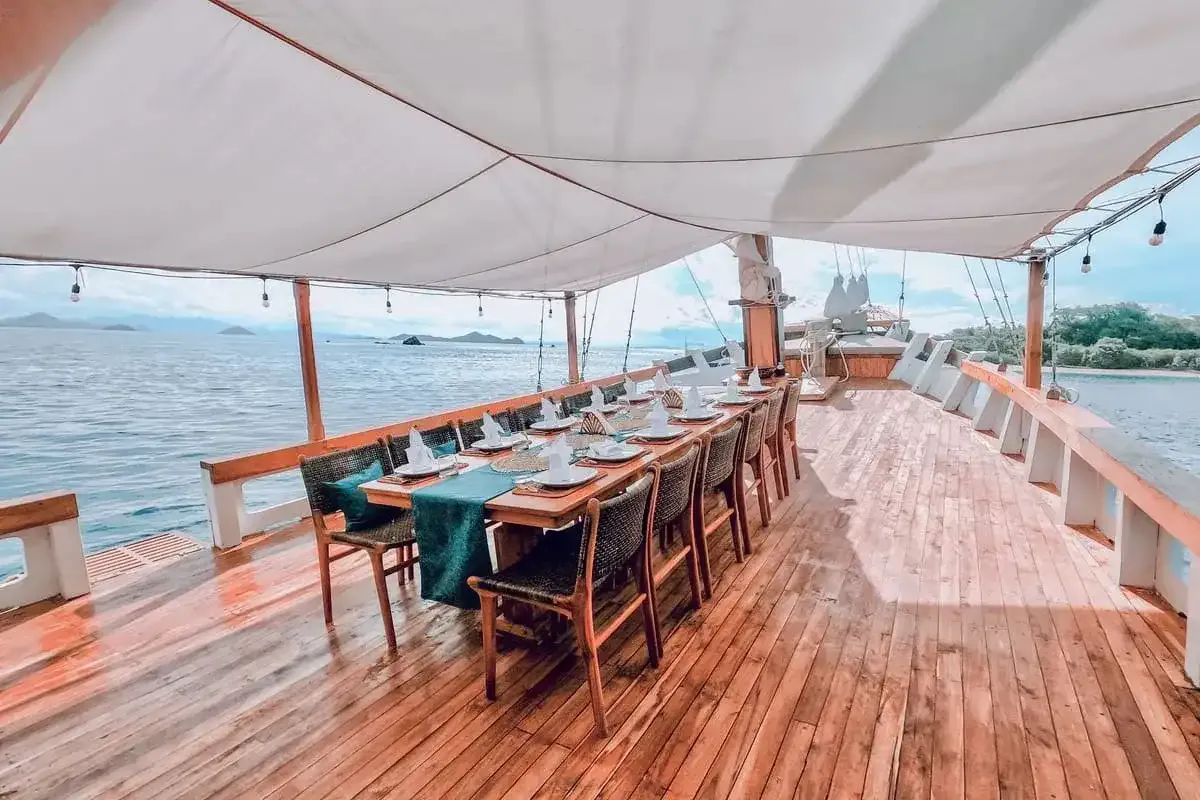
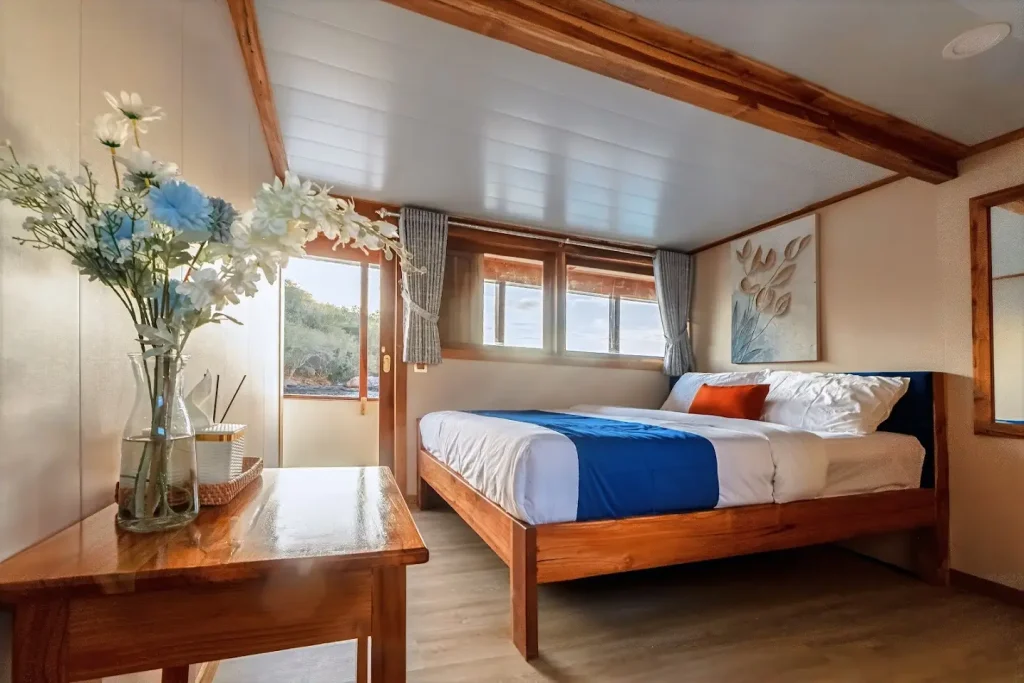
The straight answer first: on Magika Liveaboard, a shared-cabin open trip through Komodo National Park costs USD 310–520 per person for the standard three-day, two-night (3D2N) sailing out of Labuan Bajo. Every guest on board follows the same route, anchors in the same bays, and eats at the same long table. The entire gap between the bottom and the top of that range comes down to one decision — which of the nine en-suite, air-conditioned cabins your name is on.
Last updated: August 16, 2026
I keep meeting travelers who read a per-person price range and assume hidden fees are waiting at checkout. On a shared-cabin phinisi, the range means something far simpler: a cabin ladder. This piece walks that ladder rung by rung, so you understand why two friends on the same departure can pay different fares and both walk off convinced they got the better end of it.
One Ship, One Route, a Ladder of Fares
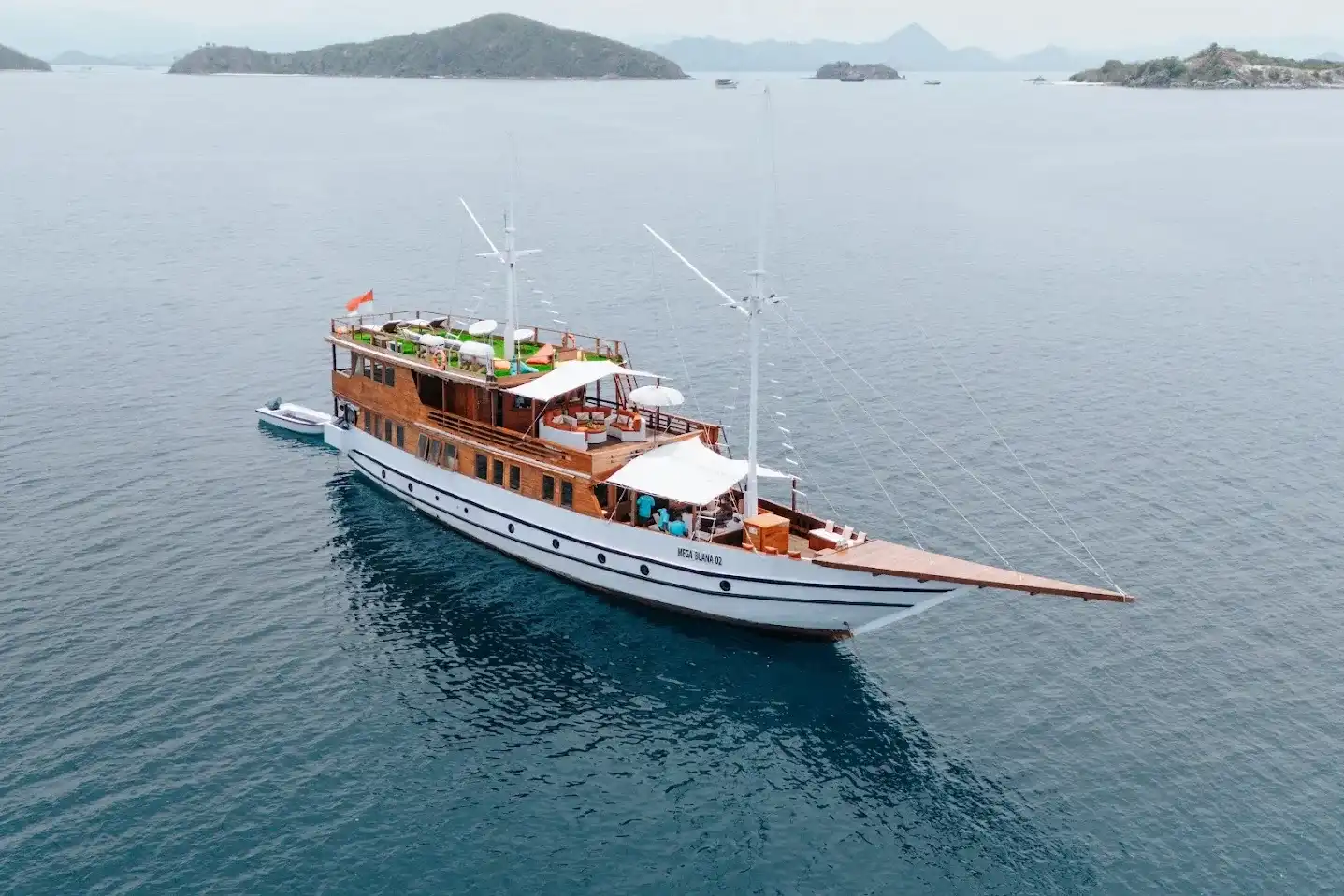
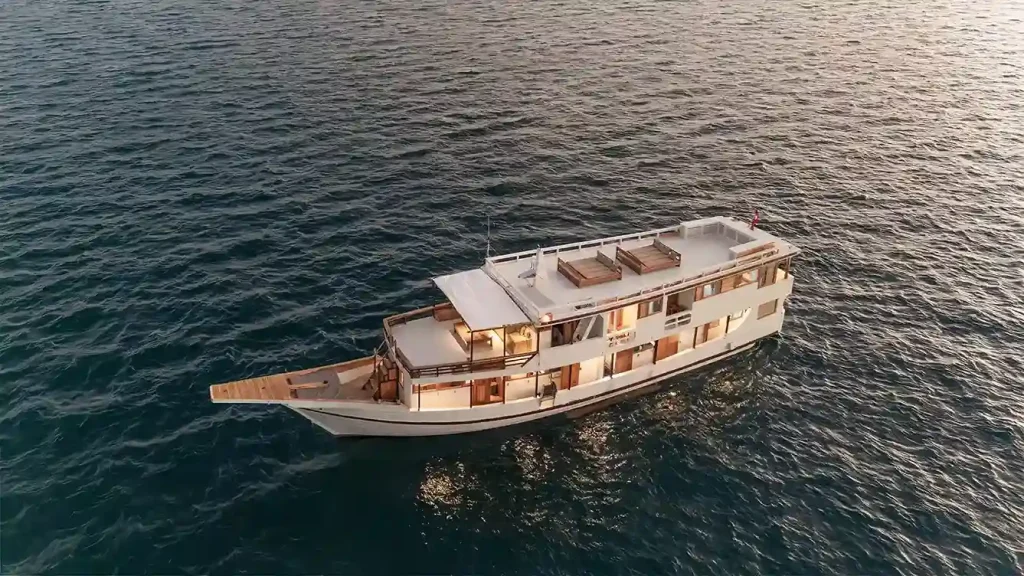
Magika is a 26.7-meter phinisi — a two-masted wooden ship in the tradition of the Bulukumba shipwrights of South Sulawesi — fitted out as a liveaboard, which is the accurate word for any vessel built around multi-day sailing where everyone sleeps on board. On an open trip you buy a berth, not the boat. She departs Labuan Bajo, her home port, with up to 22 guests spread across nine en-suite cabins, and the itinerary is identical for every fare on the manifest.
That is the part worth internalizing before you compare anything else: USD 310 and USD 520 buy the same Komodo. Same dragons, same ridgeline hikes, same snorkel drops, same sunsets off the bow. What moves the number is bunk geography — where on the ship you sleep, how much of it you get, and what you see when you open your eyes.
The Cabin Ladder, Rung by Rung
A ladder of cabin categories sounds complicated on paper. In practice it climbs on three variables: deck level, floor space, and glass.
The entry rungs
At the USD 310 end of the range sit Magika’s most compact cabins — lower positions on the ship, tighter footprints, less natural light. Here is the detail that separates this ship from most of the open-trip fleet in the harbor: even the entry fare comes with a private bathroom and air conditioning, because all nine cabins on board are en-suite. You are not buying a curtain and a queue for a shared toilet, which is still standard practice on plenty of generic boats running the same waters. The entry rung is where solo travelers and budget-minded couples quietly win: same ship, same food, same islands, lowest possible cost of admission.
The middle rungs, where family math lives
Nine cabins carrying up to 22 guests tells you something the brochure doesn’t spell out: several categories are configured for three or four sleepers, not two. The middle of the ladder is where parents put that to work — one door that closes behind the whole family, one bathroom you don’t negotiate for, and a per-person fare that lands between the two ends of the range. Mid-tier cabins also start climbing the ship, trading engine-room proximity for better air and bigger windows.
The top rung
At USD 520 you are paying for the largest footprint on board, the best deck position, and the most glass — the cabin equivalent of the corner office. Two honest caveats. First, it is still an open-trip fare: you share the ship, the schedule, and the dining table with everyone else aboard. Second, once you’re sleeping in the top category, you are close to the logic of a private charter, and it’s worth at least asking whether taking the whole vessel with your own group suits you better. Cruise comfort is the promise at every rung; the top rung just gives you the most of it.
Why the Biggest Ship in the Fleet Runs Shared Cabins at All
Magika sails as the largest group vessel in the fleet of Komodo Luxury — a registered Indonesian PT under Juara Holding Group Limited with 1,500+ verified guest reviews (4.9/5) — and that fleet context explains her double life. Much of the fleet leans toward private yacht charter, and a yacht, in the honest sense of the word, is a vessel you take whole, with luxury service scaled to your own party. Magika’s role is different: nine cabins and 22 berths make her the ship for big families and wedding parties who want an entire vessel to themselves — and, on open-trip dates, the ship where individual travelers can buy into that same teak deck at a per-person price. You can see exactly where she sits among the smaller vessels on the Komodo Luxury fleet overview.
Yumana, a sister vessel in the same fleet, carries fewer guests and suits travelers whose instinct says “smaller table, fewer cabin-mates.” Neptune Cruise, another sister vessel in the same fleet, sits in that more intimate bracket too. Magika’s counter-argument is scale: more shared deck, more categories to choose from, and the only cabin ladder in the fleet wide enough that a backpacking couple and a honeymooning pair can sail the same departure at fares that make sense to both.
Divers Ride the Same Ladder
Magika also runs diving packages alongside the standard open trip, and the structure matters more than any number here: your cabin fare and your diving package are two separate decisions. Divers sleep on the same ladder as everyone else — a diver in an entry cabin and a diver in the top category surface from the same reef. Multi-day diving is, after all, where the word liveaboard earned its keep in the first place; Komodo’s currents and sites reward exactly the kind of dawn starts that only sleeping on the water makes possible.
Two 2026 Facts That Should Shape Your Planning
The visitor cap. Since April 1, 2026, Komodo National Park has limited entries to 1,000 visitors per day. For shared departures this is mostly invisible to guests — operators plan island timings around it — but it rewards travelers who lock their dates deliberately rather than improvising from a Labuan Bajo café the night before. If you’re weighing how different operators structure their shared departures under the cap, this guide to Labuan Bajo liveaboard options is a sensible next read.
The earthquake. On August 15, 2026, a magnitude 7.7 earthquake struck the region. Monitoring recorded a maximum wave of 0.36 meters — no destructive tsunami — and the national park reopened the same day. That same-day reopening is the fact worth holding onto when headlines reach you out of context: the park’s operations proved resilient, and sailings resumed on their normal rhythm. For how to spend your hours in town before boarding, the Labuan Bajo luxury travel guide covers the shore side well.
Picking Your Rung Without a Spreadsheet
My short method, refined over too many pricing conversations: if the cabin is a place you’ll only be unconscious in, take the entry rung and spend your attention on the islands. If you’re traveling as three or four, price the family-configured middle before you price anything else. If the cabin is part of the holiday itself — reading in bed with a view, long showers, actual drawer space — climb toward USD 520 and don’t apologize for it. And if you catch yourself wanting every cabin on the ladder, that isn’t an open-trip question anymore; that’s a charter conversation for a big family or a wedding party, and it happens to be the exact job this ship was fitted out to do.
Frequently Asked Questions
What is the Komodo open trip price per person on Magika Liveaboard?
USD 310–520 per person for the 3D2N shared departure from Labuan Bajo. The itinerary is identical for everyone on board; the fare depends entirely on which cabin category you choose.
Do the cheaper cabins mean shared bathrooms?
No. All nine cabins on Magika are en-suite with private bathrooms and air conditioning, including the entry category. The fare difference is about deck position, cabin size, and natural light — not plumbing.
Is Magika a yacht, a phinisi, or a liveaboard?
All three words get used loosely around the harbor, so here’s the precise version: Magika is a phinisi (a traditional two-masted wooden ship from the Bulukumba building tradition) operated as a liveaboard (a vessel designed for multi-day trips with guests sleeping aboard). “Yacht” properly describes a private luxury charter — which Magika becomes when one group takes all nine cabins.
How does the 1,000-visitor daily cap affect an open trip?
Since April 1, 2026, Komodo National Park admits a maximum of 1,000 visitors per day. Shared departures schedule island visits within that system, so the practical effect for guests is simply that firm, deliberate planning beats last-minute improvisation.
Did the August 2026 earthquake disrupt Komodo sailings?
The magnitude 7.7 earthquake on August 15, 2026 produced a maximum recorded wave of 0.36 meters — no destructive tsunami — and the national park reopened the same day. Sailings continue on their normal rhythm.
Can one group take the entire ship instead of sharing?
Yes — that is Magika’s defining role. As the largest group vessel in the Komodo Luxury fleet, with nine en-suite cabins for up to 22 guests, she is built for big families and wedding parties who want a full-vessel charter rather than a shared departure.
Talia Alistair writes Magika Liveaboard’s journal from Labuan Bajo, where she spends an unreasonable amount of time comparing cabin plans so you don’t have to.
Travelling as a big party instead of a pair? Start at the Komodo liveaboard for large groups page — nine cabins, 22 berths, and band rates that beat separate open-trip fares from about eleven guests up.