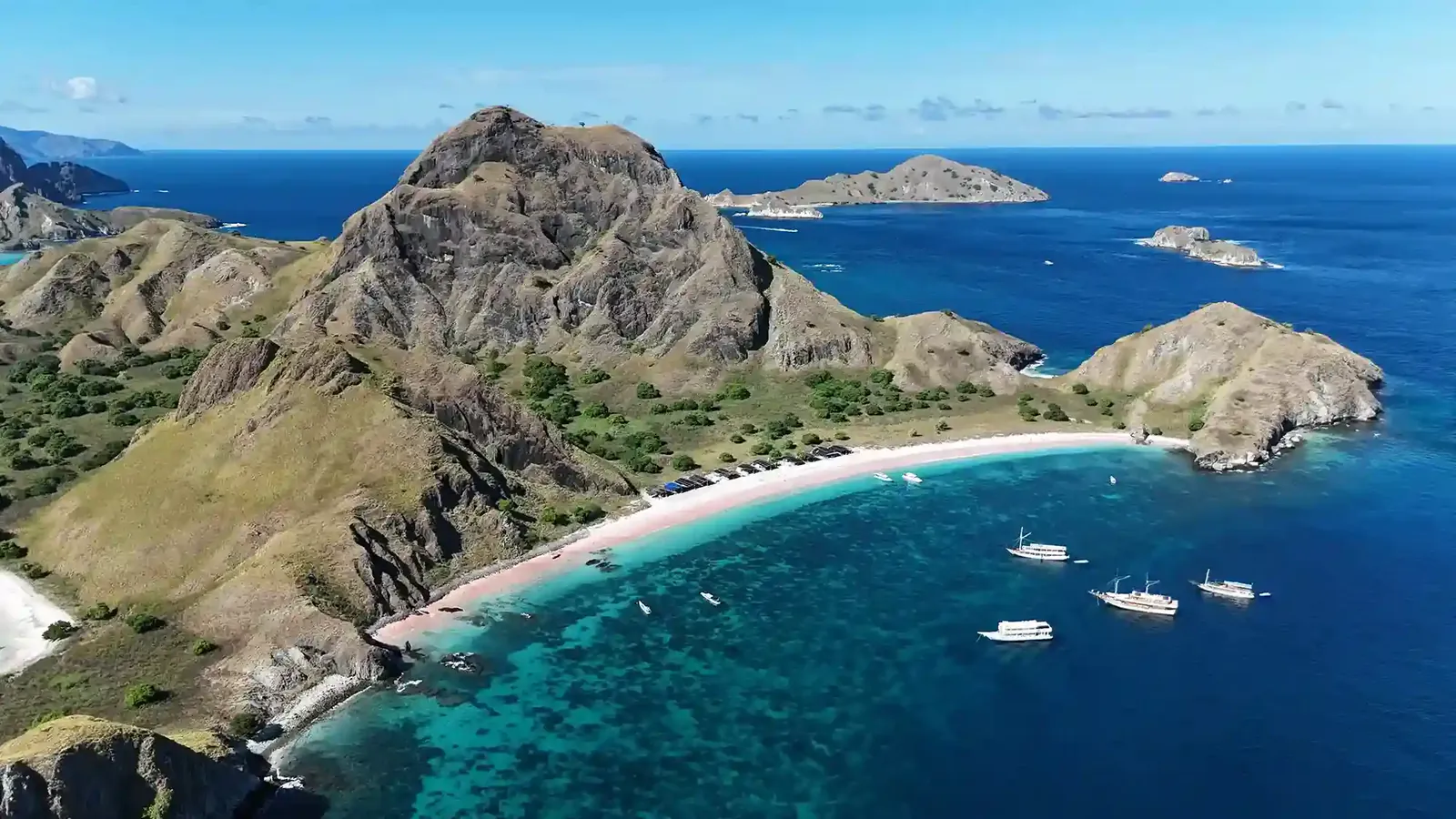
Pink Beach reads most pink in the first two hours after sunrise and the last two before sunset, when low sun and wet sand exaggerate the red coral fragments mixed through the white. From a liveaboard you arrive around an hour after Padar — roughly 07:30 to 08:30 — which is inside that window and ahead of the day boats.
Vessel data and rates on this page come from the operator’s published Magika rate card and specification sheet and were checked on 1 August 2026. Rates are reviewed annually and move with fuel, route changes and regulation. Ask for the current sheet in writing before you transfer a deposit.
Why is Pink Beach pink, and why does it sometimes look beige?
The colour comes from fragments of red organ-pipe coral broken down and mixed into white carbonate sand. That means the pink is a mixture, not a pigment — so the intensity depends on three things you can partly control and one you cannot.
- Sun angle. Low, warm light saturates the red. Overhead midday sun washes it out to pale beige. This is the biggest single factor.
- Wet versus dry sand. The waterline strip is always more vivid than the dry sand above it. Photograph the wet band.
- Recent weather. Swell redistributes the coral fragments; after a rough week the mix can concentrate or dilute.
- Your expectations. Edited photographs online are heavily saturated. The real colour is a soft rose, not a strawberry milkshake. Saying so is more useful than pretending otherwise.
What time do you arrive from a boat at anchor?
Pink Beach sits about an hour to ninety minutes from the Padar anchorage. On a standard 3D2N route the morning runs Padar at sunrise, breakfast under way, then Pink Beach mid-morning — which is why liveaboard guests are usually ashore and swimming while the first speedboats from Labuan Bajo are still crossing.
| Leg | Approximate time at 8 knots |
|---|---|
| Labuan Bajo → Kelor | ~1 hour (verified) |
| Labuan Bajo → Kanawa | ~1–1.5 hours |
| Kelor → Manjarite | ~0.5–1 hour |
| Manjarite → Kalong | ~1 hour |
| Kalong → Padar (sailed overnight) | ~3–4 hours |
| Padar → Pink Beach | ~1–1.5 hours |
| Pink Beach → Komodo Island | ~0.5–1 hour |
| Komodo → Manta Point (Karang Makassar) | ~0.5–1 hour |
| Manta Point → Taka Makassar | ~20–30 minutes |
| Taka Makassar → Siaba | ~1–1.5 hours |
| Siaba → Kanawa | ~1–1.5 hours |
| Window | Colour | Crowd | Water |
|---|---|---|---|
| 06:30 – 09:00 | Strongest — low sun on wet sand | Overnight boats only | Usually calmest; best snorkelling visibility |
| 09:00 – 11:00 | Good, fading | Day boats arriving | Light chop building |
| 11:00 – 15:00 | Washed out under overhead sun | Peak | Warmest, most stirred |
| 15:00 – 18:00 | Returning — warm light again | Thinning | Calmer; the second good window |
Does a liveaboard actually change the Pink Beach experience?
In three concrete ways, yes.
- Arrival hour. You are there in the good light because you slept two hours away instead of three hours away in a hotel bed in Labuan Bajo.
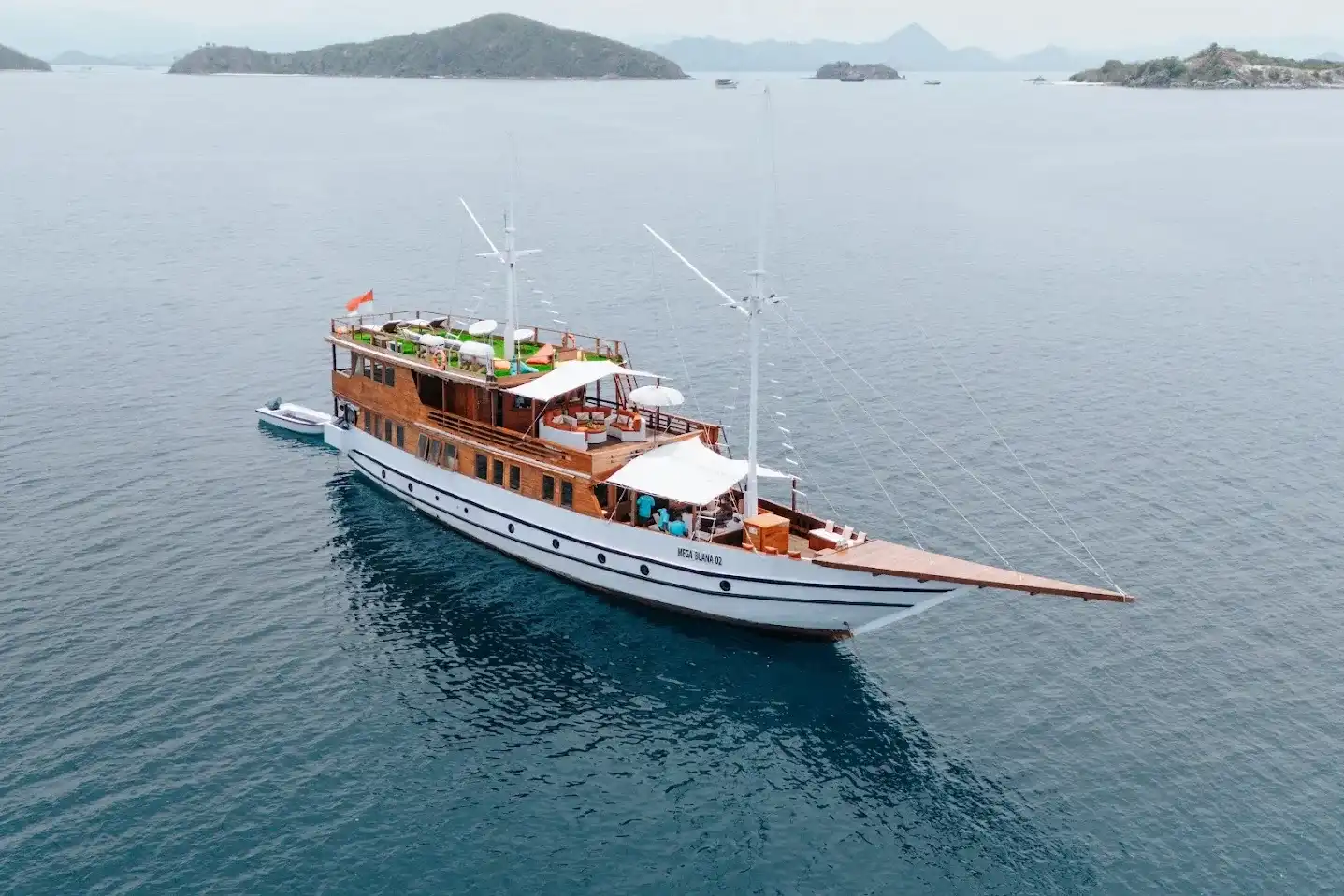
- Tender rather than jetty. A tender lands you on the sand directly. With 22 guests maximum, that is two or three shifts rather than a queue.
- Time control. The boat leaves when the group is finished, not when a fixed speedboat schedule says so. On a whole-boat charter that control is absolute.
What is the snorkelling like?
Better than the beach photographs suggest, and it is the reason to get in the water rather than only stand on the sand. The reef here is a shallow hard-coral garden in roughly five to twenty metres with light to moderate current, suitable for all levels including divers with minimal experience. Expect anthias in clouds, reef fish, and turtles with reasonable frequency.
| Site | Depth | Current | Level | What you see |
|---|---|---|---|---|
| Pink Beach | 5–20 m | Light to moderate | All levels | Shallow coral garden, anthias, turtles |
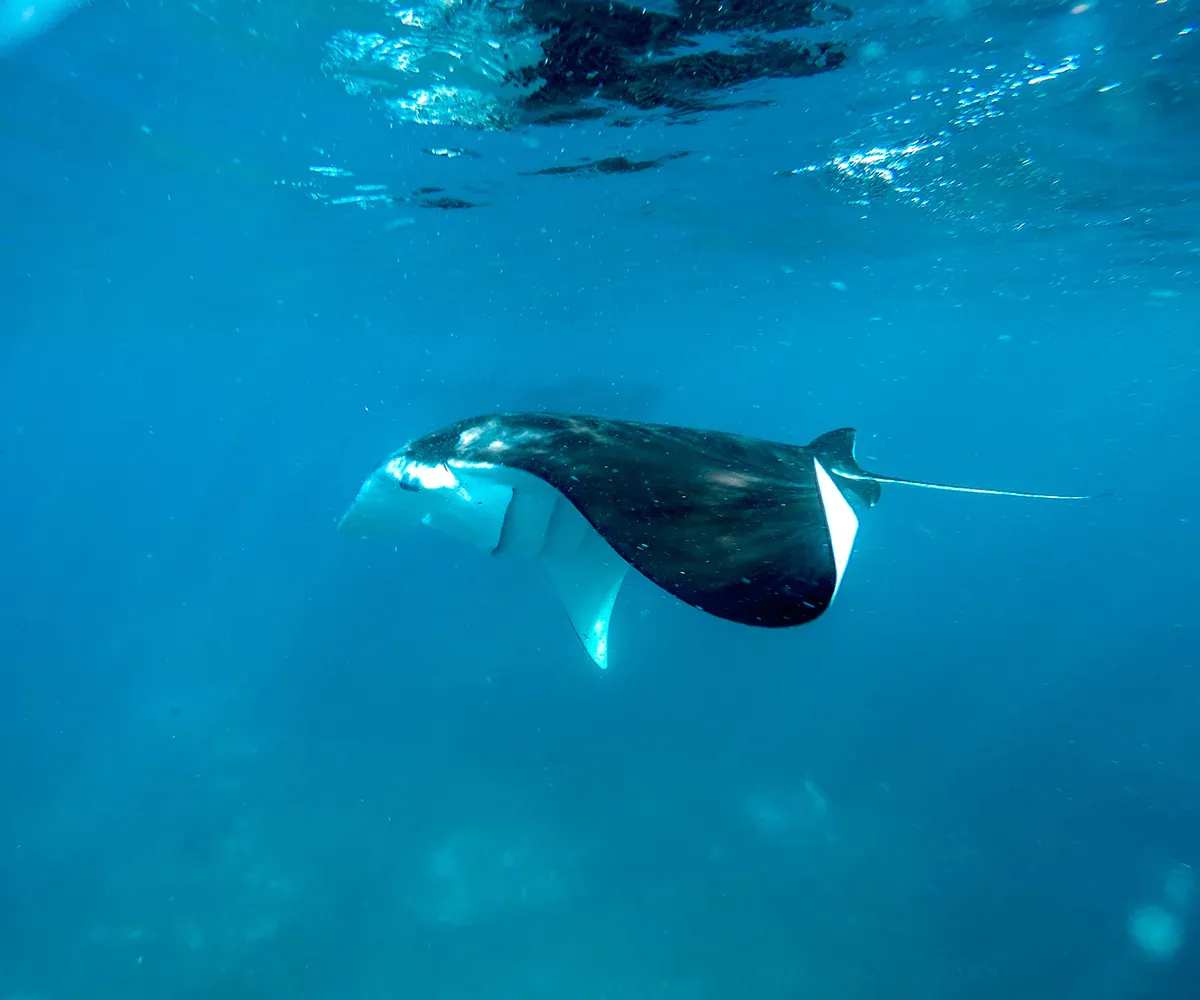
| Karang Makassar (Manta Point) | 8–18 m | Gentle to moderate drift | All levels, Open Water + ~10 dives | Manta rays year-round, eagle rays, cuttlefish |
| Siaba Besar | 5–18 m | Light, sheltered bay | Beginner-friendly | Turtles, macro life, good check dive |
| Batu Bolong | 5–35 m | Always present, moderate to strong | Advanced | Dense fish biomass, reef sharks, Napoleon wrasse |
| Castle Rock | 4–30 m | Very strong, negative entry | Advanced only, reef hook required | Grey and whitetip reef sharks, giant trevally, barracuda |
Practical notes that matter more than they should
- There is no shade on the beach and no facilities. Sun protection is the entire kit list.
- Reef shoes help; the entry has coral rubble in places.
- Reef-safe sunscreen, applied on the boat rather than at the waterline, keeps oil off the coral.
- Taking sand is prohibited. The colour exists because the fragments stay where they are.
Where Pink Beach sits in the day
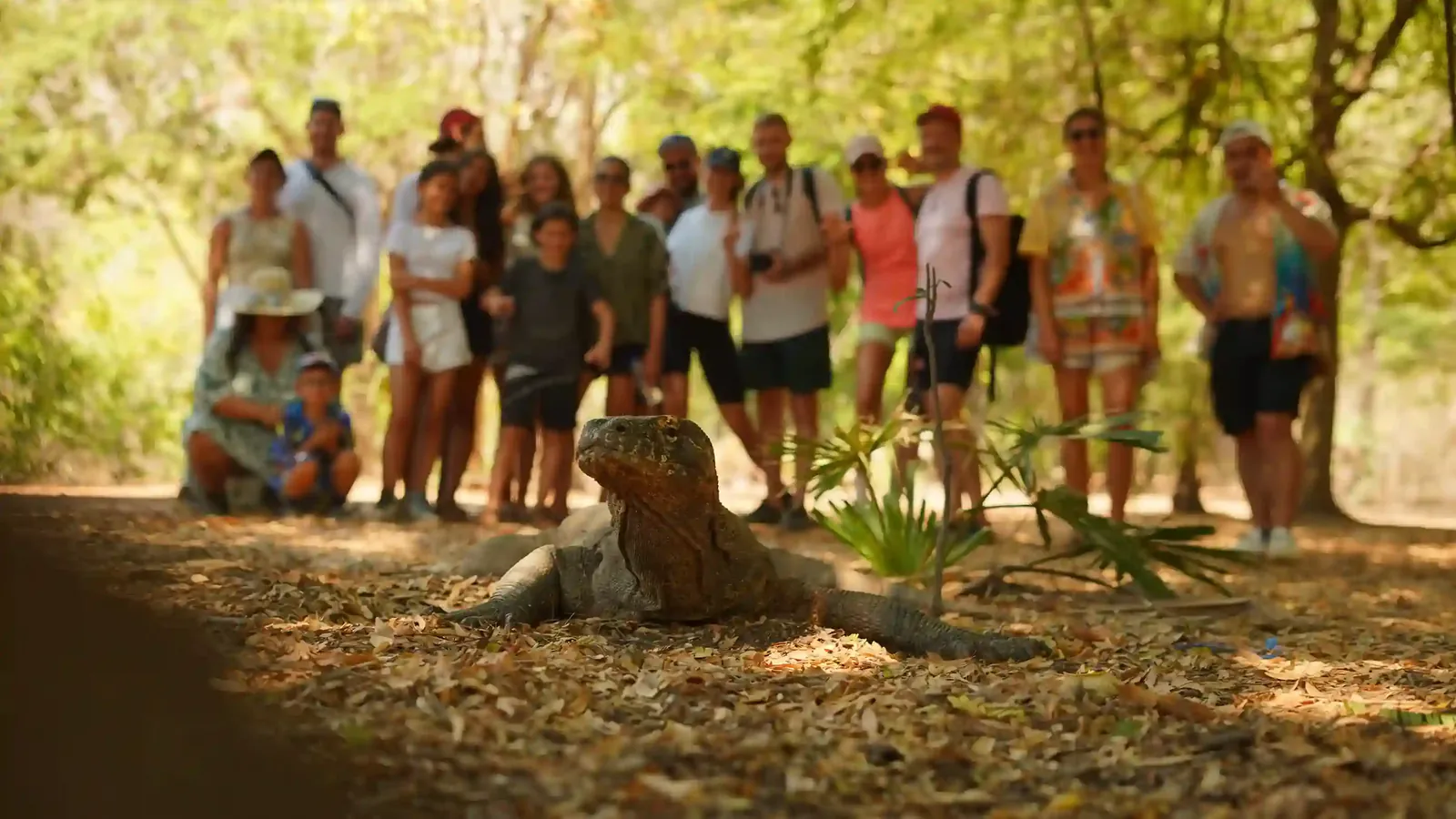
After Pink Beach the boat continues to Komodo or Rinca for the ranger walk, then to Karang Makassar for the manta drift and the Taka Makassar sandbar. The order of those last two changes constantly with tide and current, and any operator promising a fixed sequence is describing a hope. Which ranger station you visit is a real decision with real consequences, and we work through it in the Rinca versus Komodo Island comparison.
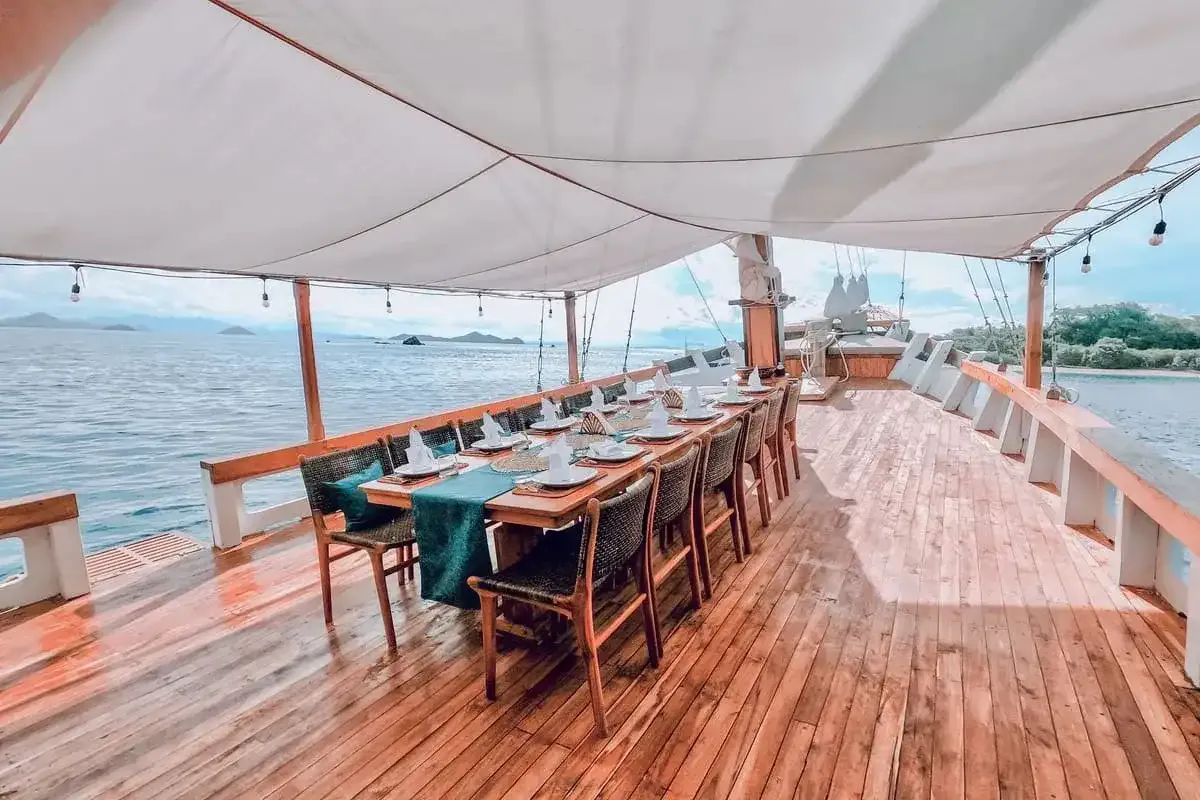
What the boat’s tenders and deck equipment do on days like this is set out on what the hull, tenders and toys actually do, and the twelve-point definition we use for “luxury” in this context is on the twelve-point test for a luxury Komodo liveaboard.
How to check dates and book
If the pink in the photographs is the point of the trip, the variable to optimise is arrival hour — and arrival hour is decided by where the boat sleeps. Magika’s calendar is held by the reservations desk at Komodo Luxury, the operator that markets and charters the vessel — trading since 2015 and part of Juara Holding Group.
- WhatsApp: +62 811 3823 875 — quickest route to a live availability check or a date hold
- Email: [email protected] — better for written quotes, contracts and invoices
Ask for the rate sheet, the cabin allocation and the deposit ladder in one written message. Anything an operator will not put in writing is not a policy.
Frequently asked questions
What time of day is Pink Beach most pink?
The first two hours after sunrise and the last two before sunset. Low sun saturates the red coral fragments mixed into the white sand. Under overhead midday sun the beach reads pale beige.
Why is Pink Beach pink?
Fragments of red organ-pipe coral are broken down and mixed through white carbonate sand. It is a mixture rather than a pigment, so the intensity varies with light angle, whether the sand is wet, and how recent swell has redistributed the fragments.
What time do liveaboards reach Pink Beach?
Typically between 07:30 and 08:30 on a standard 3D2N route — about an hour to ninety minutes after leaving the Padar anchorage, which puts you there in good light and ahead of the day boats from Labuan Bajo.
Is the snorkelling at Pink Beach good?
Yes. It is a shallow hard-coral garden in roughly 5 to 20 metres with light to moderate current, suitable for all levels. Expect clouds of anthias, reef fish and turtles with reasonable frequency.
Can you take pink sand home from Pink Beach?
No, removing sand is prohibited. The colour exists only because the coral fragments remain in place, and the beach is inside Komodo National Park.
Is Pink Beach worth it if the photos are edited?
Yes, with calibrated expectations. The real colour is a soft rose rather than the saturated pink of edited images, strongest along the wet waterline in early or late light. The snorkelling is arguably the better half of the stop.